When I am first getting to know people, they will often ask whether I have children. “Yes, I have two boys.” “How old are they?” “Six and nine.” A common response is that those are fun ages. I usually reply that our 6-year-old, Jeremy, has a rare neurological disease and so developmentally is more at a three- to six-month level, but he is pure love and joy. Why do I respond this way? If I instead just smile and nod that these are, indeed, fun ages, the conversation will usually turn to questions about what activities the boys like to participate in together, i.e., what do they do?
The next questions are usually about Jeremy’s diagnosis and how it impacts his day-to-day life. He has a hypo-myelinating leukodystrophy, meaning that he has no myelin (white matter) in his brain. Myelin is like the insulation on an electrical wire that allows signals to be sent smoothly from the brain to rest of the body. Without it, Jeremy’s whole life is impacted. He is not able to sit up, walk, or talk, and he has a feeding tube. There are many other things he cannot do, but none of this provides insight into who he really is. The answer to the question – what does Jeremy do – is that he gives and receives love more freely than anyone I know.
When Jeremy was entering kindergarten, I had to complete a four-page developmental questionnaire to support his Individualized Education Plan. Except for the first couple of questions (Does your child show hunger? Yes. Does your child flinch at loud noises? Yes.), the answer to every other question (Does your child…?) was No. Does your child love? That question was not on the list. The capacity to love is perhaps the most basic, yet most profound, ability of all. Do you know the sum of 2 + 2? Yes. Do you know how to transfer an object from one hand to the other? Yes. Do you love? Umm. Most of us cannot answer that question with a categorical yes. But Jeremy can. He loves with his whole being. And this is precisely what Jesus calls us to do. “My command to you is to love one another” (John 15:17). “[L]ove is from God and everyone who loves is a child of God and knows God” (1 John 4:7).
Jeremy’s developmental strength is relationship. Interacting with people brings him great joy; he loves being sung to, hearing stories, receiving kisses and hugs, and playing interactive games. Some may consider these small things, but he rejoices in them. He is always ready to offer a huge smile, laugh, or squeal of delight during these times, no matter how hard his day has been. As in John 3:29, he is filled with joy at the voices of those he loves. Saint Paul reminds us in Philippians 4:4 that we should “[a]lways be joyful, then, in the Lord; I repeat, be joyful.”
Some of the qualities that contribute to Jeremy’s joy are that he lives in, and appreciates, each moment. As Saint Gianna Molla said: “The secret of happiness is to live moment by moment and to thank God for all that he, in his goodness, sends to us day after day.” When we sing, or even hum, one of Jeremy’s favorite songs, his face lights up and he is fully present in, and thankful for, that moment. Regardless of the pain he experienced earlier in the day, he is happy to be sharing that particular moment in time. His entire face radiates the sentiment that Peter expressed to Jesus in Mark 9:5, “it is wonderful for us to be here.” The light in his eyes and blissful smile on his face are Jeremy’s way of “overflowing with thanksgiving” (Colossians 2:7). For him, each one of these moments is a gift, and he appreciate them all.
Jeremy’s joy and happy reactions, in turn, bring joy and happiness to us. As Proverbs 15:30 says, “A kindly glance gives joy to the heart, good news lends strength to the bones.” He is working for the kingdom of God in his own way and brings great comfort to all who know him (Colossians 4:11).
Not only does Jeremy bring joy, happiness, and comfort, but our relationship has also deepened my faith and prayer life. As Saint Paul says in Romans 1:11-12, “I am longing to see you so that I can convey to you some spiritual gift that will be a lasting strength, or rather that we may be strengthened together through our mutual faith.” Sometimes, amid all the suffering that Jeremy has endured, my faith wavered, and prayer felt hopeless. By the grace of God, though, Jeremy’s life ultimately has encouraged us “to fight hard for the faith” (Jude 3).
Like the friends who brought the paralyzed man to Jesus by lowering his bed through the roof (Luke 5:18-20), Jeremy brings us closer to Christ. His life has shown us the importance of uniting our sufferings with Christ’s and asking the Lord to redeem them (Colossians 1:24-25). Jeremy also shows us how to suffer well. He experiences suffering but does not give it the last word. Joy always follows.
Despite his ongoing suffering, Jeremy never worries and always trusts in the love of those who care for him. He lives Matthew 6:34 daily: “do not worry about tomorrow: tomorrow will take care of itself. Each day has enough trouble of its own.” We, too, should remember Jesus’s encouragement to his disciples in Luke 12:22 and 32, “I am telling you not to worry . . . There is no need to be afraid, little flock, for it has pleased your Father to give you the kingdom.”
Jeremy trusts my husband and me wholeheartedly, even though we do not always know the right path to take with respect to his care. The specific type of leukodystrophy that Jeremy lives with has not yet been discovered, so there are many unknowns with respect to the course of his condition. His trust in our love points us to trust in the love of God: “Is there anyone among you who would hand his son a stone when he asked for bread? Or would hand him a snake when he asked for a fish? If you, then, evil as you are, know how to give your children what is good, how much more will your Father in heaven give good things to those who ask him!” (Matthew 7:9-11).
Finally, Jeremy encourages us on the path of uprightness. “The upright shows the way to a friend” (Proverbs 12:26). Jeremy lives a holy and saintly life, blameless, unsullied, and at peace (2 Peter 3:11-14). Each day, he displays the fruits of the Spirit, especially love, joy, peace, patience, kindness, goodness, trustfulness, and gentleness (Galatians 5:22-23). He builds us up with the purity of his spirit (2 Corinthians 12:19). “Blessed are the pure in heart: they shall see God” (Matthew 5:8).
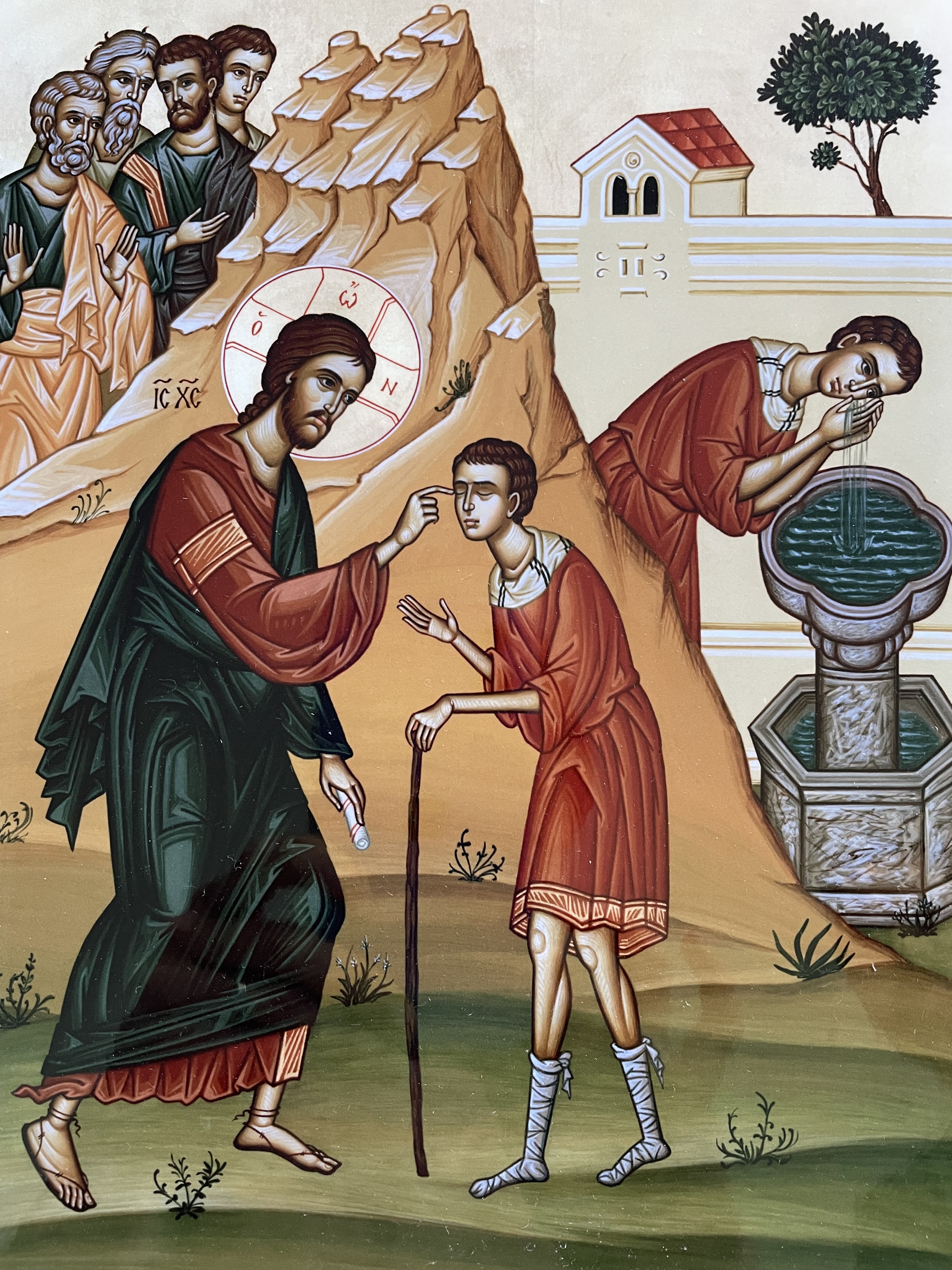
Sadly, some question whether a life like Jeremy’s is worth living. Not only does his life have inherent value and dignity from God (cf. Genesis 1:26-27, Psalm 139:13-16), but as you can see, he is also living out the Word of God each day (e.g., John 14:23, Romans 13:8) and changing lives! The works of God are being revealed in him (John 9:3). As Saint Anthony of Padua said, “He who is the beginning and the end, the ruler of the angels, made himself obedient to human creatures. The Creator of the heavens obeys a carpenter; the God of eternal glory listens to a poor virgin. Has anyone ever witnessed anything comparable to this? Let the philosopher no longer disdain from listening to the common laborer; the wise, to the simple; the educated, to the illiterate; a child of a prince, to a peasant.”
Perhaps we can each pray for the grace to live, like Jeremy, with more joy, presence, gratitude, trust, and purity of heart. May the Lord also grant us the grace to strengthen each other’s faith, to bring each other closer to Christ, and to suffer well. “I bless you, Father, Lord of heaven and of earth, for . . . revealing [these things] to little children” (Matthew 11:25).
 Grace and Truth
Leave a comment