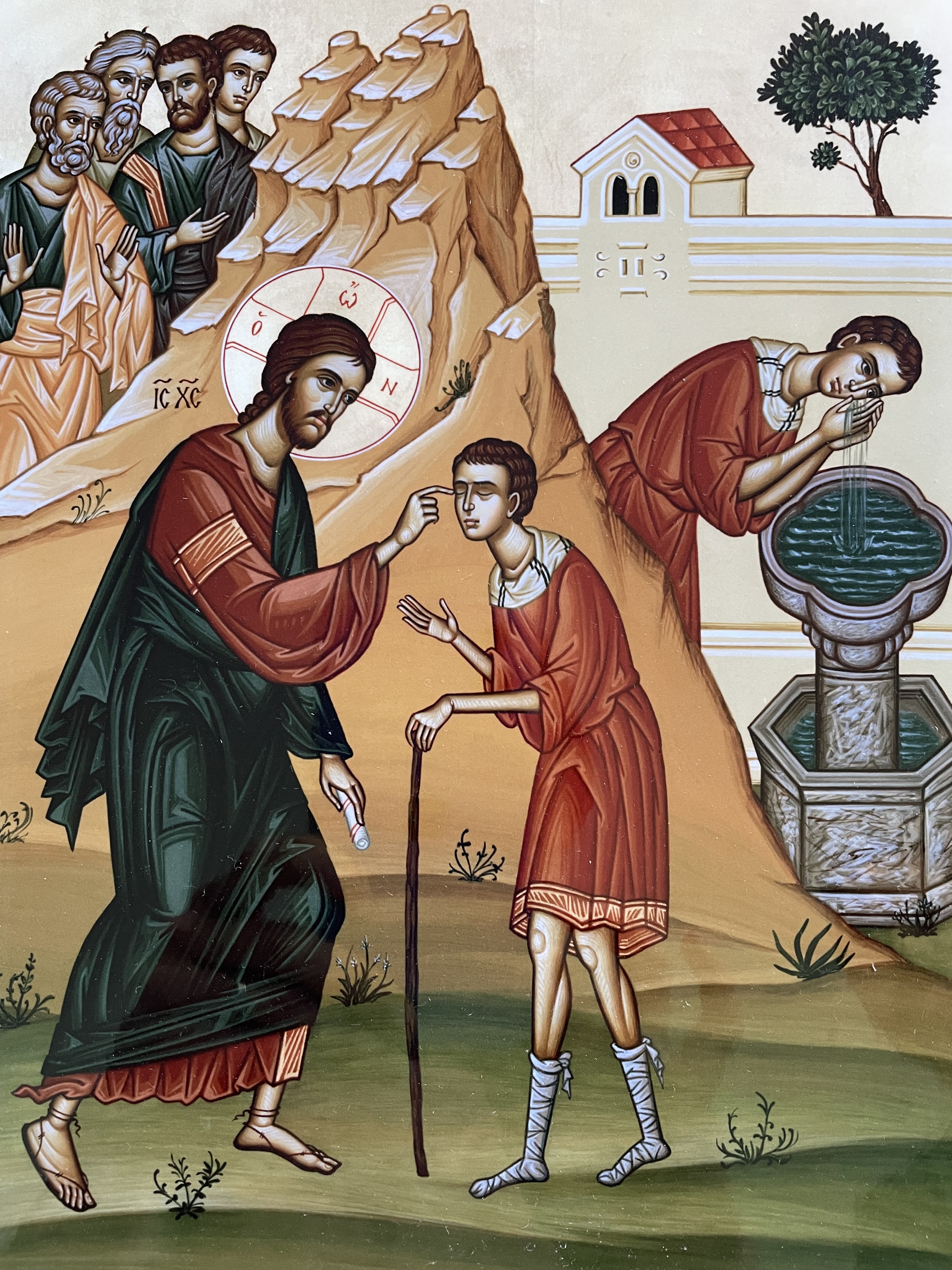
In reading Luke 6, I was especially touched by two themes—first, how intimately the Lord knows each of us, and second, generosity (Luke 6:38). In Luke 6:7, the scribes and Pharisees were watching Jesus to see if he would cure someone on the Sabbath, hoping to find a charge to bring against him. Verse 8 says that Jesus “knew their thoughts.” John 3:24-25 likewise says that “Jesus knew all people . . . he never needed evidence about anyone; he could tell what someone had within.”
In Psalm 139, we see the beautiful depths to which the Lord knows us. “Lord, you examine me and know me, you know when I sit, when I rise, you understand my thoughts from afar. You watch when I walk or lie down, you know every detail of my conduct. A word is not yet on my tongue before you, Lord, know all about it . . . You created my inmost self, knit me together in my mother’s womb . . . You knew me through and through . . . In your book all my days were inscribed, every one that was fixed is there” (Psalm 139:1-4, 13-14, 16).
Since the Lord knows us completely, the Holy Spirit touches and consoles us in ways that are unique to each of us. Not one of our thoughts, fears, anxieties, wounds, or sufferings is beyond the Lord’s reach. As Psalm 94:19 says, “however great the anxiety of my heart, your consolations soothe me.” Because God “can see into all hearts,” when we are unable to pray, the Holy Spirit comes to help us in our weakness, personally making our petitions for us (Romans 8:26-27).
In the profound confessions of faith of Simon Peter, Nathanael, and Thomas, we see that the Lord knew each man and the particular difficulty or doubt that he was experiencing and touched each one personally. For Simon Peter, after a long, unsuccessful night in his occupation as a fisherman, Jesus led him to a huge catch of fish; he was awestruck and fell at the knees of Jesus saying, “leave me, Lord; I am a sinful man” (Luke 5:4-9).
Nathanael doubted that the Son of God could come from Nazareth, but immediately confessed Jesus as the Son of God and king of Israel when he heard Jesus say, “before Philip came to call you, I saw you under the fig tree” (John 1:46-49). Thomas refused to believe that the disciples had seen Jesus after his death unless he, too, could see Jesus and his wounds firsthand, and so our Lord visited Thomas in the very way that he needed, leading Thomas to confess, “my Lord and my God!” (John 20:25-28).
Even knowing all our imperfections and faults, the Lord loves us so personally and with an everlasting love (Jeremiah 31:3). “It is proof of God’s own love for us, that Christ died for us while we were still sinners” (Romans 5:8).
Given our Lord’s extravagant love for each of us, we too are called to be generous in loving others. God loves a cheerful giver (2 Corinthians 9:7).
As we are journeying through Advent and preparing a place for Christ, are there ways we can be more generous in loving others? Perhaps we can pray for the grace to love generously, not simply in the way that we want to love, but sacrificially, for “there is more happiness in giving than in receiving” (Acts 20:35).


Leave a Reply