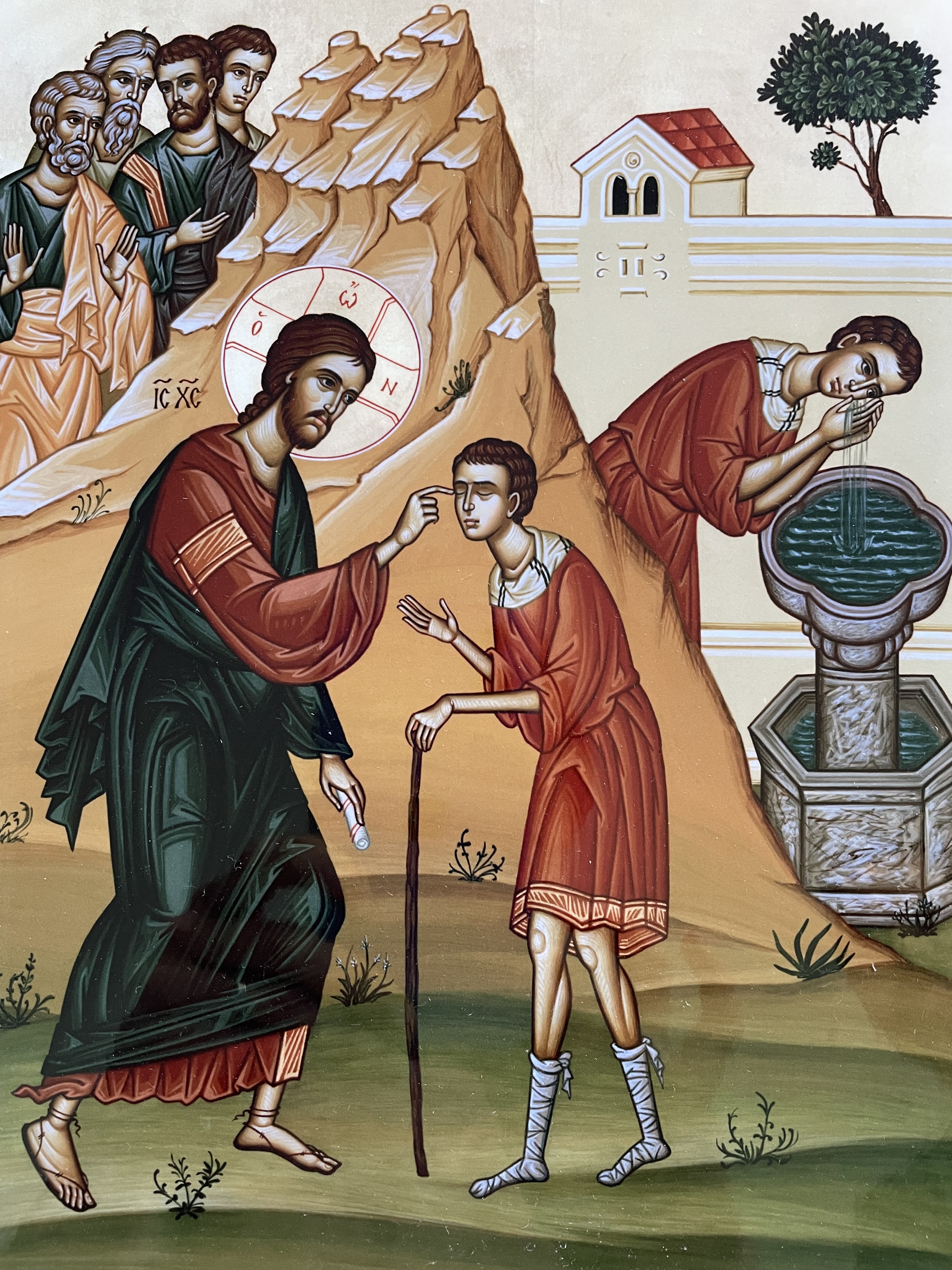
“When He went into Capernaum a centurion came up and pleaded with Him. ‘Sir,’ he said, ‘my servant is lying at home paralyzed and in great pain.’ Jesus said to him, ‘I will come myself and cure him.’ The centurion replied, ‘Sir, I am not worthy to have you under my roof; just give the word and my servant will be cured. For I am under authority myself and have soldiers under me; and I say to one man, “Go,” and he goes; to another, “Come here,” and he comes; to my servant, “Do this,” and he does it.’ When Jesus heard this, He was astonished and said to those following Him, ‘In truth I tell you, in no one in Israel have I found faith as great as this’ . . . And to the centurion Jesus said, ‘Go back, then; let this be done for you, as your faith demands.’ And the servant was cured at that moment” (Matthew 8:5-13).
Dear brothers and sisters in Christ,
I hope you are all keeping well. As we continue to live this Lent as a time of healing, let’s reflect next on the cure of the centurion’s servant and the healing power of God’s Word. The passage begins with the centurion pleading with Jesus on behalf of his servant who was paralyzed and in great pain. Jesus offered to go to the servant to cure him, but the centurion—in an act of great faith and humility—responded, “Sir, I am not worthy to have you under my roof; just give the word and my servant will be cured.” Jesus was amazed at the centurion’s faith, and He cured the servant immediately through His Word saying, “let this be done for you, as your faith demands.”
In his own life, the centurion had experienced soldiers under his authority obeying his commands, and so he readily accepted the greater authority of God’s Word, trusting that it always accomplishes what it is sent forth to do. In the Gospel of Luke, we read that Jesus’s teaching made a deep impression on the people because His Word carried authority (Luke 4:32), and in Isaiah 55:11, that the Word “will not return to [the Lord] unfulfilled or before having carried out [His] good pleasure and having achieved what it was sent to do.”
In today’s passage, Jesus cured the centurion’s servant through the words that He spoke. In our lives, too, when we ask the Lord to heal the wounds that keep us from fully and freely receiving His love, loving Him and one another, and carrying out the work He has entrusted to us, He also only has to say the Word, and we shall be healed. As the Psalmist said, “my God, I cried to you for help and you healed me” (Psalm 30:2), and “they cried out to the Lord in their distress; He rescued them from their plight, He sent out His Word and cured them, and rescued their life from the abyss” (Psalm 107:19-20).
But there is another dimension to the all-healing Word of God (Wisdom 16:12), which is the healing that comes from reading and making our home in God’s Word. Through His Word, the Lord heals the wounds and hurts within us in many ways—by bringing life, understanding, cleansing, grace, and love to each of us.
Dwelling in the Word brings life and rejuvenates us completely, including the parts within us that feel dark or deadened. Not only does the Word bring life (Philippians 2:16; 1 John 1:1), but the Word is life. As Jesus said, “it is the spirit that gives life, the flesh has nothing to offer. The words I have spoken to you are spirit and they are life” (John 6:63). In every moment of our days, we have a choice between life and death; we have to choose life (Deuteronomy 30:19)! When we do, we will find that the Word has brought refreshment to our souls, joy to our hearts, and light to our eyes (Psalm 19:7-8).
Making our home in the Word also brings a healing understanding—of the Lord, of ourselves, and of one another. The Scriptures reveal to us the promises of God, His love, and the truth about our inmost selves and one another. Hebrews 4:12 reminds us that “the Word of God is something alive and active: it cuts more incisively than any two-edged sword: it can seek out the place where soul is divided from spirit, or joints from marrow; it can pass judgement on secret emotions and thoughts.” Therefore, we can pray with the Psalmist, Lord, “by your Word give me understanding” (Psalm 119:169), for when we do not understand the Scriptures or the power of God, we will have wrong perceptions (Mark 12:24) about the Lord, ourselves, and one another, and these misconceptions can be the source of much pain in our lives.
Spending time in the Word also cleanses us, bringing God’s grace. When we have a physical wound, one of the first steps we take towards healing is to clean the wound. This is also essential in our spiritual lives. In John 15:3, Jesus said, “you are clean already, by means of the Word that I have spoken to you” and, in John 17:17, that it is the Word of God that sanctifies us. When we humbly approach God in the Scriptures and pray, “Lord, if you are willing, you can cleanse me,” we will experience Jesus stretching out His hand, touching us, and responding, “I am willing. Be cleansed” (Matthew 8:2-3). Sometimes our wounds are the result of our sins. Psalm 38:5 says, “I have stinking, festering wounds, thanks to my folly.” But Romans 5:20 encourages us that no matter how much sin increases, grace is always greater. The Word of grace has the power to build us up and give us our inheritance among the sanctified (Acts 20:32).
Remaining in the Word also heals us by wrapping us in God’s faithful love. In the beautiful words of Pope Francis, “love alone heals life”—
“Sister, brother, you are here, let Jesus look at and heal your heart . . . if you have already felt His tender gaze upon you, imitate Him, and do as He does. Look around: you will see that many people who live beside you feel wounded and alone; they need to feel loved: take the step . . . Let us open our hearts to welcome others. Because love alone heals life, love alone heals life.”
Each of us will experience the healing power of God’s love through the Scriptures uniquely, because the Lord touches each of us in a special way. In my experience, reading the Psalms and the Gospel of John especially reveal God’s love. Below is just a small taste from the Psalms:
- How precious, God, is your faithful love. So the children of Adam take refuge in the shadow of your wings. They feast on the bounty of your house, you let them drink from your delicious streams; in you is the source of life, by your light we see the light (Psalm 36:7-9).
- You, Lord, have not withheld your tenderness from me; your faithful and steadfast love will always guard me (Psalm 40:11).
- I shall sing the faithful love of the Lord forever, from age to age my lips shall declare your constancy, for you have said: love is built to last forever, you have fixed your constancy firm in the heavens (Psalm 89:1-2).
- I need only say, ‘I am slipping,’ for your faithful love, Lord, to support me; however great the anxiety of my heart, your consolations soothe me (Psalm 94:18-19).
- Upright in all that He does, the Lord acts only in faithful love. He is close to all who call upon Him, all who call on Him from the heart. He fulfills the desires of all who fear Him, He hears their cry and He saves them. The Lord guards all who love Him (Psalm 145:17-20).
May we each take our Bibles, read them, and taste and see that the Lord is good and how blessed we are when we take refuge in Him (Psalm 34:8).
As we do, let’s pray for the grace to be open to the way in which the Lord wants to heal us (Matthew 13:15-16). Sometimes when the Lord is working to heal us, we may become angry, uncomfortable, or sad because it is not happening as we want. For instance, in 2 Kings 5:1-15, we read of Naaman’s healing from a virulent skin disease. Naaman was instructed to bathe in the Jordan for healing, but “Naaman was indignant and went off, saying, ‘Here was I, thinking he would be sure to come out to me, and stand there, and call on the name of the Lord his God, and wave his hand over the spot and cure the part that was diseased . . . And he turned round and went off in a rage” (2 Kings 5:11-12). Eventually, thankfully, Naaman bathed in the Jordan as he was told to do, and “his flesh became clean once more like the flesh of a little child” (2 Kings 5:14).
Finally, in John 21, we see how Jesus so lovingly and precisely healed Peter from his three denials by asking Peter three times whether he loved Jesus. The Word of God says that Peter was hurt that Jesus asked him a third time (John 21:17). But God knows what is best for us, and so we are called to trust even when we experience confusion or pain along the healing journey. The Lord will sustain us on the way and, ultimately, transform us altogether (Psalm 41:3). May we encourage one another to persevere until every tear is wiped away and there is no more sadness or pain (Revelation 21:4), for God’s love is everlasting (Jeremiah 31:3)—greater than we can imagine—and His plan for us is life in fullness eternally (John 10:10). Thanks be to Him!
 Grace and Truth
Leave a comment